
The expensive terms: Capacity flexibility
The requirement for downward capacity flexibility is a key factor that significantly impacts the pricing of the overall ITO service agreement.
 Get access
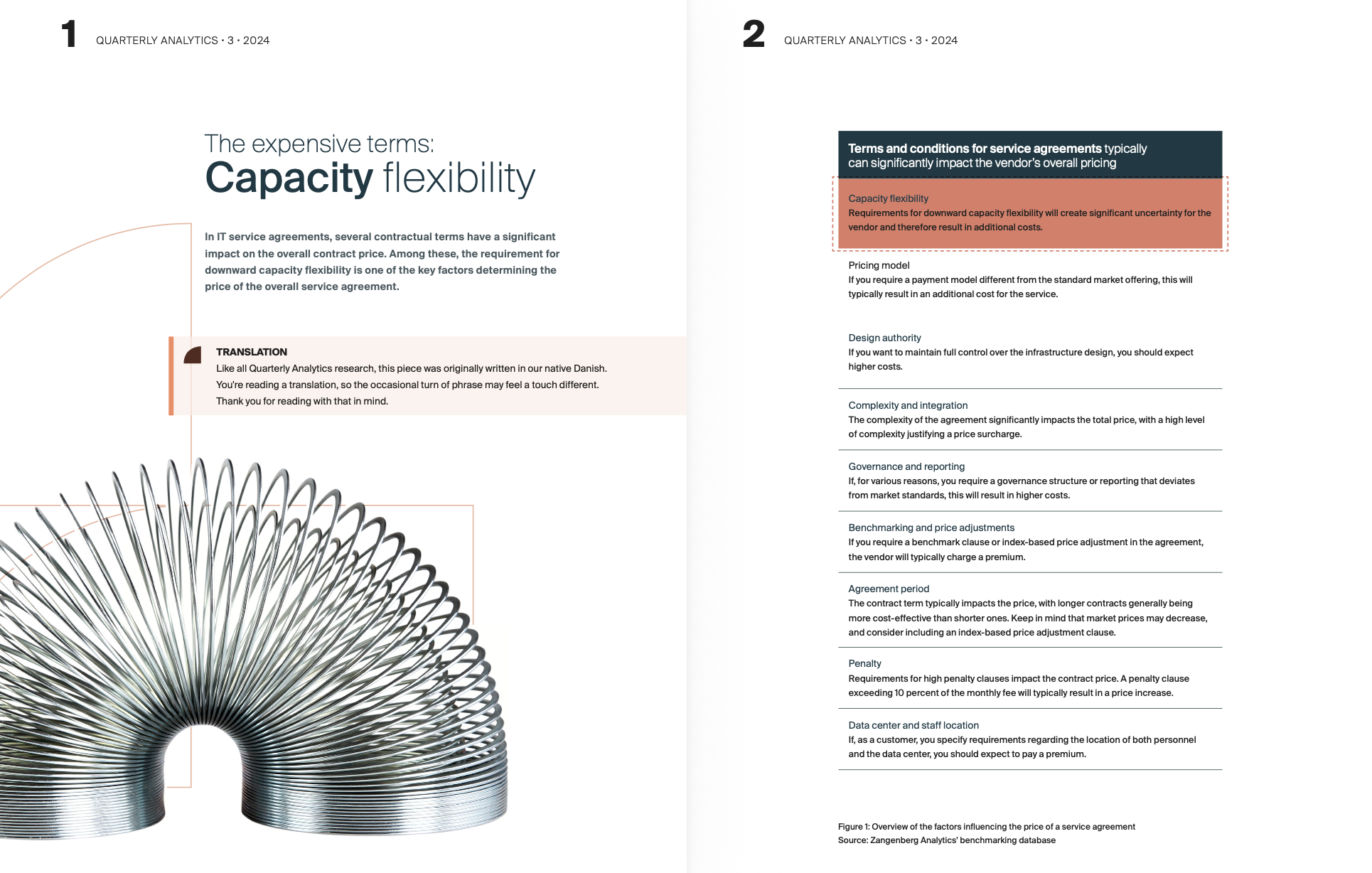
An outsourcing agreement typically defines the delivery of a specific capacity, such as the operation of a set number of applications and the associated infrastructure measured in terms of server count, storage capacity, etc. An agreement with built-in capacity flexibility allows the customer to scale service consumption up or down, with the total price adjusting accordingly. For the supplier, downward flexibility is a source of uncertainty regarding future revenue, which justifies a premium price.
For most IT operations providers, a requirement for high or unlimited downward capacity flexibility poses a significant financial risk. This is primarily because the supplier incurs several fixed costs in providing IT operations that are not directly tied to the volume purchased.
Any ITO supplier will reasonably seek to mitigate the commercial risks associated with downward capacity flexibility by increasing the unit prices in the agreement.
This article examines the factors contributing to the risk of high downward capacity flexibility and explores alternative options to consider in its place.
The article is relevant to anyone who works strategically with the procurement of outsourced IT operations services.